NeoEarth


Thursday, July 7, 2011

BREAKING: Cancer cell breakthrough reported by Hebrew University of Jerusalem

THE JERUSALEM POST
By JUDY SIEGEL-ITZKOVITCH
07/07/2011 19:22
Hebrew University of Jerusalem


DNA strand double helixJerusalem scientists identify molecular basis for DNA breakage, which results in the development of cancer.


The molecular basis for the breakage of DNA – the hallmark of cancer cells – has been identified by Hebrew University of Jerusalem scientists. The important discovery will be published on Friday in the prestigious journal Molecular Cell.

The DNA encodes all the genetic information needed to build the cell’s proteins. Thus, breaks in the DNA disrupt the proteins and lead to changes in cell function. These changes can lead to defects in the control of cellular proliferation, which results in the development of cancer.


Using cutting-edge technologies, researchers Prof. Batsheva Kerem and doctoral student Efrat Ozeri-Galai, of the Alexander Silverman Institute of Life Sciences in the HU’s Faculty of Science, were able to characterize for the first time the DNA regions that are the most sensitive to breakage in early stages of cancer development.

This is a breakthrough in our understanding of the effect of the DNA sequence andstructure on its replication and stability, they said on Thursday.

“A hallmark of most human cancers is accumulation of damage in the DNA, which drives cancer development,” Kerem said. “In the early stages of cancer development, the cells are forced to proliferate. In each cycle of proliferation, the DNA is replicated to ensure that the daughter cells have a full DNA. However, in these early stages the conditions for DNA replication are perturbed, leading to DNA breaks, which occur specifically in regions defined as ‘fragile sites.’” 

In their research, the team used a sophisticated new methodology that enables the study of single DNA molecules to study the basis for the specific sensitivity of the fragile sites. The findings are very important, as they shed new light on the DNA features and the regulation of DNA replication along the first regions that break in the development of cancer.

The results show that along the fragile region, there are sites that slow the DNA replication and even stop it. To allow completion of the DNA replication, already under normal conditions the cells activate mechanisms that are usually used under stress. As a result, under conditions of replication stress, such as in early cancer development stages, the cell has no more tools to overcome the stress – and the DNA breaks.

This study revealed the molecular mechanism that promotes cancer development, they said.


Currently, other studies focus on the very early stages of cancer development, aiming to identify the events leading to cancer on the one hand and to its inhibition, on the other. The current research identified for the first time DNA features that regulate DNA replication along the fragile sites, in early stages of cancer development. In the future, they hope, these findings could lead to the development of new therapeutic approaches to restrain and/or treat cancer.

Note:
Once again, Israel's scientists are on the cutting edge of discovering a major breakthrough - this time, giving hope to all cancer patients and survivors of cancer.  I am a "survivor"; my beloved husband died last year after a brief illness with cancer.  For me, this is personally exciting news.
Thank you, Israel. for always contributing to make this world a better place.  

Bee Sting

Is Israel Expected to Negotiate with a Hamas-Fatah Government?


COMMENTARY

Surveying the Muslim World

The curse of living in interesting times
NATIONAL REVIEW ONLINE
CONRAD BLACK
Most observers seem to be wearying of the Arab Spring, just as it is becoming interesting. The idea of a democratic contagion that would suddenly sweep away centuries of autocratic misrule and replace it with Tocquevillean civic-mindedness was too far-fetched for all but the most robustly wishful. But the notion that Mubarak in Egypt and Saleh in Yemen would be replaced almost magically by preferable people did enjoy wider currency than it deserved. Stretching the canvas across the Western and Near Eastern Muslim lands, more than a dozen countries can be seen, in snapshots, at widely differing stages of fermentation.


Morocco, always one of the most successful Arab countries, remains so. It was independent for many centuries prior to the French protectorate of 1912–56, and even signed Most Favored Nation trade agreements with Jefferson and Madison’s America. With a significant and influential Jewish population, it treats them quite well. King Mohammed, in response to rather gentle protestations, has just produced a new constitution that doesn’t give away much of his own prerogatives, but establishes a freely elected parliament and a range of civil rights, and the constitution was approved — without transports of popular enthusiasm, but without protest also — by 98.5 percent of the country. The Spring is not high summer in Morocco, but there are some green shoots.


In Algeria, where the constitution establishes the army as the guarantor of democracy — to prevent the triumph of the Islamist, anti-democratic parties required the imposition of a military dictatorship and the conduct of a long civil war in which hundreds of thousands of people died violently — the durable President Bouteflika has prevailed. There is the traditional Arab version of forcibly guided government festooned with a few trappings of popular influence, but it is progress from the long war of insurrection that preceded it.

Tunisia and its self-immolating protester had their 15 minutes of the world’s attention, and a somewhat similar regime to that which was ousted is in place. In Libya, NATO redefined a no-fly zone, the French and British revived Lend-Lease to borrow air-to-ground missiles from the U.S. and plastered the loyalists with them, and the French reinterpreted the U.N. Charter to allow arming the insurgents. Qaddafi is checking the air routes to the few places that would have him. If Milosevic couldn’t take the unfriendly skies of NATO, there was never any chance that Qaddafi could.

Egypt is a shambles. Hillary Clinton is trying to open up relations with the Muslim Brotherhood, as if there were any possible rapport between those two sides, or as if the U.S. brought anything to the party anyway (a party it should be grateful not to have been asked to attend). It ditched Mubarak, and is anathema to the Brotherhood (which is still unrepentant about murdering Anwar Sadat); and its financial assistance, though significant, could be replaced by one or more of the Arab OPEC countries. Egypt is not ready for the September elections, and the army, trying to maintain order, is losing its popularity. The traditional Arab choice impends, between reasonable (in policy terms) armed force, with no aptitude for government, and Islamist lunacy, with an aptitude only for chaos.
More interesting is Syria, where the withdrawal of the government from Hama, though it may be a ruse preparatory to a massacre replicating the piping days of Papa Assad, indicates that the Alawite terror is weakening. They passed the litmus tests of ordering the massacre of civilians and having the orders carried out, and they still can’t stop the demonstrations and heavily armed attacks on the police and army. The Alawite regime, with Mrs. Clinton’s commendation of it as a vehicle for reform ringing in its ears, is now in a race with Qaddafi to see who goes first, and young Assad will be packing up his implements and returning to his optometrist’s practice in Ealing (East London).
In the Arabian Peninsula, the pantomime horse in Saudi Arabia of the House of Saud (front legs), and the Wahhabi establishment (back legs), though spavined, continues to march on in the desert, and the Saudis bankroll over 90 percent of the Wahhabis’ Islamist agitprop (cultural) centers throughout the Muslim world. In the Muslim calendar, we are almost where the Christians were at the time of Columbus, and the Saudis, despite the encouragement and warm support of Maureen Dowd, arrest women for driving cars. So far, the Saudis have succeeded in buying off the discontented, but as everyone knows, it always comes to a showdown with blackmailers. The Saudi failure to crush the Islamist extremists and turn the pantomime horse into a functioning biped creates acute continuing uncertainty about whether this ungainly desert animal is going forward or back.
The Palestinians are waiting to see who governs in neighboring countries before confirming the bomb-throwing incompatibility of Hamas and Fatah; Hamas and Hezbollah are wondering how they are going to be supplied after Assad is swept out in Damascus; Lebanon is on hold waiting for Hezbollah, and in Iran the unspeakable Ahmadinejad, having just had his entire presidential staff arrested and been booed in the Majlis, mother of Islamist parliaments, is reduced exclusively to the patronage of the Grand Ayatollah. Iraq is a dodgy post-American proposition and its appeasement of Iran is tempered only by acute uncertainty about who will hold the reins, if there are any, in Tehran in three months.  
Saudi intervention stopped the Iranian-provoked uprising in Bahrain, where the complaints about Shiite civil rights in a country with per capita annual income of $27,000 was just a pretext for the palsied and infected hand of Tehran’s meddling. Throughout the region, the Saudis and the U.S. are supporting rival conservative and liberal factions. The United Arab Emirates, where one relative bails out the other for building an empty tower to the heavens vastly surpassing in height and elegance Kim Jong Il’s attempt at the same beanstalk, is a model of stability, though not of enlightened rule. In Yemen, the attempted assassination of President Saleh has given the world a fortuitous glimpse, as al-Qaeda advances on furry feet, of how unpalatable the alternatives to the incumbent are.

Turkey is the Muslim superpower, thanks to the traditions of Suleiman the Magnificent, peer and contemporary of Charles V, Henry VIII, and Francis I — and, more particularly, the traditions of Kemal Atatürk. It is difficult to see what the Erdogan regime is aiming at, apart from cleaning up the corruption of the military-dominated autocracy of his Kemalist secular predecessors. This alone has unleashed high rates of GDP and per capita income growth, and it is always the case that the replacement of a regime 80 years in office (as the city of Chicago will discover eventually) improves standards of probity and effectiveness of government.


The anti-Israeli posturing is tedious, and Turkey historically has a great deal less regard for the Arabs than for the Jews. There is no evidence at this point that Turkey seeks more than a traditionalist reawakening, promoting pride of continuity and making itself more accessible to the importunity of the Arabs. Turkey could take over Syria and Lebanon tomorrow and almost everyone, including the Israelis, would be relieved. The Europeans, by their arrogant, condescending treatment of Turkey as a mendicant at their back door, are chiefly responsible for this distemper in Ankara and Istanbul. But Turkey has been a Great Power for most of the time since the rise of the nation state, before Russia, Prussia-(Germany), Italy, much less Japan and the United States, and it will not find Araby an adequately commodious pasture for long, any more than it did in earlier times. The West must keep a light in the window for the Turks, even if we have to throw it temporarily out of whatever NATO decomposes into in the meantime.


And in Afghanistan and Pakistan the insoluble riddles continue, of how to fight the terrorists, in pursuit of whom the U.S. has recruited most of its longstanding allies, while the Afghan and Pakistani governments, whom we are trying to protect from the terrorists, are in fact playing footsie with the terrorists whom they credit with more staying power than their distinguished Western helpers against them.


The ancient conundrum of these countries is imperishable: The Western Muslim nations, except for Lebanon (if foreign interlopers could be excised) and Jordan (and leaving Turkey aside), have only the armed forces, the Islamists, and secular leftists, none of which have the remotest notion of how to govern, generate economic growth, devise civic institutions, or even reinvest petroleum revenues, and seem even to have lost their greatest former talent, of suppressing street violence. Militant Islam is nonsense and the West should stop pandering to the barbarous elements of that religion. Of course there are rational versions of Islam that are unexceptionable and culturally legitimate notions of how to propitiate the presumed deity. But the self-conscious feebleness of almost all Western leaders opposite the murderous lunacy of terrorist Islam, from which only the Pope and a few secular leaders have dissented, is more demeaning and futile than any version of appeasement practiced by the originators of the expression. No one has any idea what is going to happen in these Muslim countries, and the West will have to do better than it has. The Arab Spring could be a crisis for all seasons.


 — Conrad Black is the author of Franklin Delano Roosevelt: Champion of Freedom and Richard M. Nixon: A Life in Full. He can be reached atcbletters@gmail.com.

Israeli security braces for influx of foreign protesters


IDF soldier undergoes counterterrorism training at Israeli border.


IDF soldier undergoes counterterrorism training at Israeli border.
CREDITS/IDF/ISRAEL

EXAMINER


Hundreds of anti-Israeli activists, network groups and organization members, most of them Palestinian and Western, are preparing a mass propaganda display at Israel's Ben-Gurion International Airport on or around July 8, an Israeli source told the Law Enforcement Examiner. 
The event is called "Bienvenue Palestine" ("Welcome to Palestine") or "Fly-in Action" (or Ahalan wasahalan fi Filastin in Arabic). They are also planning a series of events (lasting until July 16) in Judea and Samaria and in Israel to show solidarity with the Palestinians and defame Israel, according to officials with Meir Amit Intelligence Center.
 
Hundreds of activists are expected to arrive in Israel from around the world including groups from the United States such as Code Pink and other radical leftist groups. Their plan is to confront the Israeli authorities at the airport by publicly announcing their intention to reach the Palestinian Authority-administered territories.
 
The plan may escalate into a protest with a demand for the so-called "right of return," and a protest against Israel's preventing foreign nationals from freely entering the "occupied Palestinian territories." The organizers intend to use passive resistance if an attempt is made to put them on planes to return them to their countries of origin, but past experience has shown that "passive resistance"  quickly deteriorates into violence, according to IDF reports.
 
Once they leave Ben-Gurion Airport, they plan to engage in solidarity activities with the Palestinians in Judea and Samaria and in Israel. According to the campaign organizers, there will be a week's worth of solidarity activities with Palestine, from planting olive trees to marches protesting the security fence and settlements. Such events, they claim, will be held in Ramallah (July 9), Bethlehem (July 10), Jenin, Nablus and the Galilee (July 11), Hebron and the Jordan Valley (July 12), the Negev and Lod (July 13), and Jerusalem (July 14-15).3 A final event may also be held on July 16.
 
The timing of the propaganda display and connected events is, according to the organizers, related to the decision of the International Court in the Hague according to which the security fence (the so-called "wall" and "apartheid wall" by the organizers) is illegal.
 
However, in reality, the display and various events are part of the campaign to delegitimize Israel, and are another aspect of the anti-Israeli defamation propaganda campaign, with a series of events including Nakba Day and Naksa Day, and the current flotilla (whose participants and ships have run into many difficulties, and remain in the Piraeus and other Greek ports).

I AM ISRAEL - PART 1

I AM ISRAEL - PART 2


Political correctness gone mad at Ground Zero

We can have a Ground Zero Mosque, but not a memorial that actually memorializes 9/11


By Michael Burke
-

Thursday, July 7, 2011


Mugshot
Illustration: WTC sphere


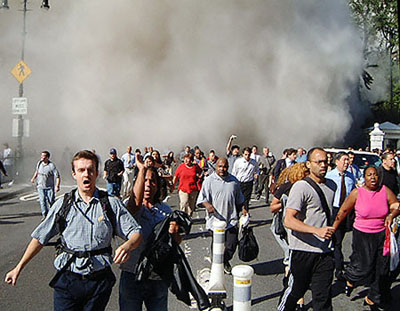
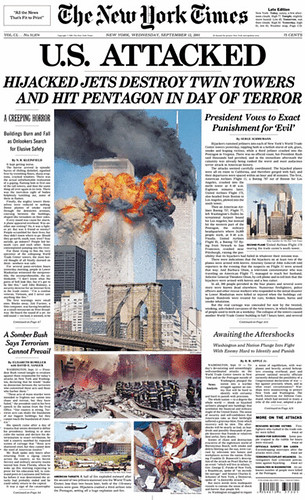
This Sept. 11, the 10th anniversary of the terrorist attacks upon America, New York Mayor Michael R. Bloomberg will dedicate the massive, $600 million National September 11 Memorial and Museum at the World Trade Center. What Americans have not been told is that this “memorial” will remake Ground Zero so that it does not acknowledge 9/11.
Instead of acting as a constant reminder of the attacks, a symbol for us and future generations of the evil that struck, the death and destruction it caused and the heroism and sacrifice in response, the memorial will wipe out all evidence and memory of the attacks.
Replacing all reminders of the attacks will be two immense “voids” with gigantic subterranean waterfalls designed to express exclusively, as per architect Michael Arad, the continuing “absence in our lives caused by these deaths.”
About 500 trees will be planted upon the site. They are, we are told by memorial officials, “traditional symbols of the rejuvenation of life.” They also will eradicate all trace and memory of what stood there for 30 years and its destruction on Sept. 11.
The cause of “these deaths,” how these people came to be absent - that is, 9/11 - has been deemed irrelevant and even contrary to your memorial “experience.”
The memorial is not about that; it’s about you.
Cities and towns across America have humbly requested a segment of the twisted steel of the WTC to feature in their own modest Sept. 11 memorials. The only memorial where one is not welcome is the “national” memorial at Ground Zero. Those iconic remnants, exactly because they are iconic, are considered far too gauche for the jury of intellectuals and artists who chose the design.
The National September 11 Memorial at the WTC will not include the iconic WTC “Sphere” - again, exactly because it is iconic. “The Sphere” stood in the center of the WTC plaza for 30 years as a symbol of world peace. On 9/11, though badly damaged (a piece of one of the planes tore through it) it survived the attacks in place and was embraced by many Americans as a symbol of the nation’s strength and resiliency.
That is why it cannot be returned.
It sits at Battery Park, about a half-mile from Ground Zero, where it was installed March 11, 2002, the six-month anniversary of the attacks, as a “temporary” memorial. Battery Park is undergoing its own renovations, and “The Sphere” will have to moved.
One 9/11 anniversary at Ground Zero, Mr. Arad told me that returning “The Sphere” would be “didactic.” That is, it would tell us what to think.
Somehow disposing of it is not telling us what to think.
This is like banishing the USS Arizona from the USS Arizona Memorial.
The 9/11 memorial will not identify Christine Lee Hanson, who died with her parents when United Airlines Flight 175 was slammed into the South Tower, as being “age 2.” This might convince you that the American victims were “innocent” and the foreign terrorists “guilty.”
That would be telling us what to think.
It will not include the initials FDNY, NYPD or PAPD. It will not include the words “firefighter” or “police officer.”
Recognizing the heroism and sacrifice of the firefighters and police officers would contrast those virtues with the barbarism and crime of the terrorists.
And though Mr. Bloomberg has said our values demand a Ground Zero Mosque, he will not allow the Rev. Mychal Judge, the FDNY chaplain who died while praying the Lord’s Prayer in the lobby of WTC 1, to be identified as “Fire Chaplain Father” Mychal Judge.
It is only traditional Judeo-Christian values that have no place at Ground Zero.
The photo of the three firefighters raising the flag at Ground Zero became as iconic of Sept. 11 as Joe Rosenthal’s famous photo of the Marines’ flag-raising at Iwo Jima was of World War II. So you know its fate.
This historic and symbolic act will not be depicted or recognized in any way. The design of the “national” Sept. 11 memorial will not, therefore, honor the values targeted and will deny them as deserving of our defense and sacrifice.
“How do we commemorate the countless accumulated memories of the attacks?” the 13-member memorial jury disingenuously asked in describing their task. Their answer? Eliminate all that we, the people, remember of the terrorist attacks.
This at the place where America was attacked.
One reason the Sept.11 attacks succeeded was the scourge of political correctness. It dictated that our national security officials could not track or investigate Middle Eastern men in America despite their “suspicious” behavior (such as learning how to fly jetliners without any interest in learning how to take off or land). Evidently, we have learned nothing. The National September 11 Memorial at the World Trade Center is not, nor is it intended to be, a genuine and lasting commemoration of Sept. 11. Rather, it is political correctness gone mad.
Michael Burke served on the family advisory committee for the memorial and the advisory committee on the museum center to the Lower Manhattan Development Corp. His brother, New York Fire Department Capt. William F. Burke Jr., Engine Company 21, gave his life on 9/11.
© Copyright 2011 The Washington Times, LLC


NOTE:
AMERICANS - WILL You Tube videos
become the only reminder/tribute
to America's history
of September 11th?

Are our children being taught in schools what actually happened 
on September 11, 2001?


Whittaker Chambers, Communism, and Islam

ANDREW BOSTOM.ORG

July 7th, 2011 by Andrew Bostom |

Whittaker Chambers (April 1, 1901-July 9, 1961) 
Freedom is a need of the soul, and nothing else. It is in striving toward God that the soul strives continually after a condition of freedom. God alone is the inciter and guarantor of freedom. He is the only guarantor. External freedom is only an aspect of interior freedom. Political freedom, as the Western world has known it, is only a political reading of the Bible. Religion and freedom are indivisible. Without freedom the soul dies. Without the soul there is no justification for freedom.

***
Playwright David Mamet recently acknowledged that he had been profoundly influenced by Communist apostate Whittaker Chambers’ 1952 anti-Communist memoir, “Witness.” Mamet described how reading Chambers’ opus inspired “the wrenching experience” of forcibly re-evaluating the way he thought, particularly his confessed Leftist herd co-dependence. Echoing the delusive herd mentality of the Left’s ad hominem attacks in the 1950s on Chambers—whose allegations of Communist conspiracism have been entirely vindicated with irrefragable documentation from the captured Soviet Venona cables—Congressman Peter King’s staid initial hearings March 10, 2011 on American Muslim radicalization engendered similarly apoplectic, and equally unwarranted condemnation, evenbefore getting underway.
David Mamet’s invocation of “Witness,” and the repeated hysterical, if groundless objections to the second round of hearings by Rep. King’s Homeland Security Committee (i.e., June 15, 2011, on Muslim radicalization in US prisons),  jointly, are fitting reminders that July 9, 2011 marks the 50thanniversary of Whittaker Chambers’ death July 9, 1961.
Chambers was born April 1, 1901 in Philadelphia, and spent his childhood on the south shore of Long Island, in (then rural) Lynbrook. Upon graduating High School, Chambers left home and worked as a construction laborer on the Washington DC subway system, before drifting to New Orleans, and then returning to attend Columbia University between 1920-1924. Under the tutelage of Columbia English Professor Mark Van Doren (before Van Doren became an internationally known literary critic and poet), Chambers tried his hand at poetry, even completing a book of poems entitled “Defeat in the Village,” before realizing, “I never could write poetry good enough to be worth writing.” This apprenticeship, however, helped teach Chambers “the difficult, humbling, exacting art of writing,” and he would go on to become an exceptionally gifted writer of prose.  He joined the Communist Party in 1925, experiencing great success as a writer at The Daily Worker and as an editor at The New Masses, both communist-controlled publications. In 1932, Chambers was asked to join the underground movement of the Communist Party, and he served in the Fourth Section of Soviet Military Intelligence. Recognizing Chambers’ intellectual prowess, the underground placed him with the Ware Group (a collection of communist cells consisting of government officials and journalists) in Washington, D.C. It was here, among other promising New Deal civil servants, that he encountered Alger Hiss. Chambers and Hiss, along with their spouses, had actually become close friends before Chambers renounced Communism.
During late 1938, overwhelmed by the horrific actions of the Soviet Communist Party, in particular the Stalinist purges, and forced starvation of Ukrainian peasants, and having rejected Communism’s militant atheism, Chambers left the Communist movement. The Nazi-Soviet Pact of 1939 was a watershed event for Chambers, realizing that much of the confidential information about the U.S. that he had forwarded to the Soviet Union could now be passed to Germany. Thus Chambers, now an ex-Communist apostate, decided to divulge his prior activities for the Communist underground to the federal government. Shortly thereafter, Chambers was able to meet with the head of security at the State Department, A.A. Berle. Although Chambers revealed most of his activities, he withheld the facts of espionage conducted by his cell, largely to protect others, including, notably, Alger Hiss. Regardless, it was not until 1948—nine years later—that the information he provided to Berle was acted upon by the government. Chambers was subpoenaed at that time by the House Committee on Un-American Activities (HUAC) to corroborate the testimony of Elizabeth Bentley—the so-called “blonde spy queen”—who alleged that Soviet espionage was occurring within the U.S. government. Chambers corroborated Bentley’s allegations, supplemented them with his own, and confronted Alger Hiss on the first day of his testimony (eventually all twenty-one names that Chambers provided to HUAC were confirmed by subsequent Soviet archival research). In 1950, Hiss was convicted for perjury after two federal trials.
A naturally gifted linguist, particularly fluent in German, over the years Whittaker Chambers translated into English “Bambi,” “Dunant—the Story of the Red Cross,” and a number of children’s books.  Chambers joined Time Magazine in 1939, initially as a book reviewer, later as a writer and editor. He wrote many of Time’s cover stories during his tenure, including profiles of historian Arnold Toynbee, vocalist Marian Anderson, theologian Reinhold Niebuhr, and Pope Pius XII. Chambers, based upon his experience as a Communist, and intuitive grasp of history, displayed a remarkably prescient understanding of the “Cold War” conflict as an editor and writer for Time’s foreign news section. He also contributed seven brilliant essays to Life Magazine’s 1947-1948 “Picture History of Western Civilization” series. Compelled to resign from Time during the tumultuous Hiss trials, Chambers eventually became an editor and writer on the staff of National Review, from the latter part of 1957 to the middle of 1959. Throughout most of his journalistic career, Chambers continued to operate a farm in Westminster, Maryland, maintaining a dairy herd, raising sheep and beef cattle, and producing various crops.
This essay will explore what can be gleaned from Chambers’ witness-martyrdom in the struggle against Communism, sacrificing himself “a little in advance to try to win for you that infinitesimal slightly better chance,” and applied to the modern threat of resurgent Islamic totalitarianism. First, Chambers’ own brief 1947 comparison of Communism and nascent Islam will be placed in the context of more extensive, independent contemporary characterizations (i.e., made from 1920-2001) by Western scholars and intellectuals who also juxtaposed these ideological systems. Next, I will address Chambers’ searing critique of Communism—as an intimately knowledgeable ex-Communist true believer—and his related criticism of the West’s embrace of Godless secular humanism, rejecting its Biblical roots, in particular the belief in a Judeo-Christian God. Then I will elucidate how Chambers’ understanding that faith in the Judeo-Christian God was conjoined to Biblical freedom, and the antithetical conception of modern atheistic totalitarianism—epitomized by Communism—relate to Islamic doctrine regarding “hurriyya,” Arabic for freedom, and the God of Islam, Allah. The essay will conclude with a discussion of what Chambers’ apostasy from Communism—and the shared insights of contemporary apostates from Islam—can teach the West.
All Articles Copyright © 2007-2011 Dr. Andrew Bostom | All Rights Reserved
Printing is allowed for personal use only | Commercial usage(For Profit) is a copyright violation and written permission must be granted first.
Filed Under: Essays